

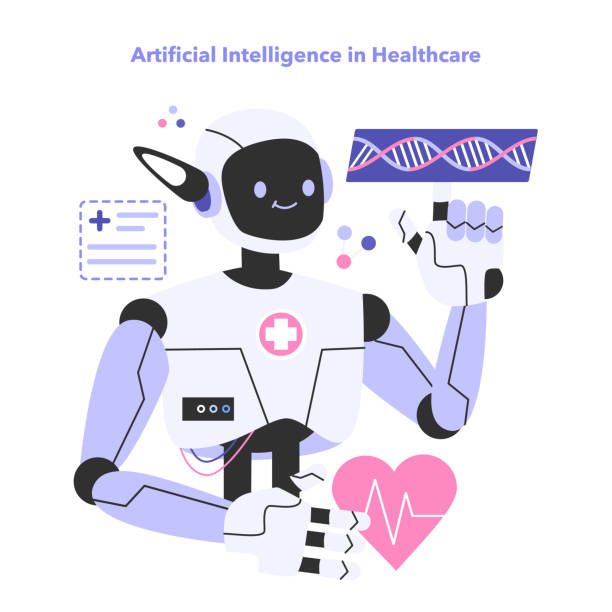
 is revolutionizing the healthcare industry and its potential to boost diagnostic precision, improve patient care, and expedite healthcare operations.)
Over the past few decades, the healthcare sector has seen incredible gains, mostly due to technological breakthroughs. The use of artificial intelligence (AI) in healthcare is among the most exciting new trends in recent years. AI has the power to completely transform healthcare delivery, making it more accessible, effective, and individualized. At WellHealthOrganic, we investigate how artificial intelligence (AI) is revolutionizing the healthcare industry and its potential to boost diagnostic precision, improve patient care, and expedite healthcare operations.
1. What is healthcare AI?
The use of algorithms and machine learning techniques to simulate human intelligence in patient analysis, diagnosis, and treatment is known as artificial intelligence in healthcare. AI can assist medical practitioners in making well-informed decisions, seeing trends, and forecasting results by efficiently and effectively analyzing vast volumes of data. A branch of artificial intelligence called machine learning enables computers to learn from data and gradually enhance their performance without the need for human involvement. AI is a potent tool for enhancing patient outcomes and streamlining healthcare procedures because of this capabilities.
2. AI and Early Diagnosis: A Revolution in Medical Practice
The use of AI in early diagnosis is among its most significant uses in healthcare. To find early indicators of conditions like diabetes, cancer, and heart disease, artificial intelligence (AI) algorithms can examine genetic information, medical imaging, and patient histories. AI-powered systems, for instance, are more accurate than human radiologists at identifying anomalies in CT, MRI, and X-ray scans. Effective treatment depends on early detection, and AI improves the capacity to identify diseases at an earlier, more manageable stage, thereby saving lives and lowering medical expenses.
3. AI for Customized Treatment Plans in Personalized Medicine
In recent years, personalized medicine—which entails tailoring medical care according to each patient’s unique genetic profile and lifestyle—has attracted a lot of attention. AI is essential to the analysis of enormous volumes of clinical, genetic, and environmental data in order to develop individualized therapy regimens for patients. AI can assist doctors in suggesting the best courses of action by analyzing a patient’s genetic composition and medical background, lowering the possibility of side effects and enhancing treatment results. As AI systems continue to advance, it is anticipated that this individualized approach to healthcare will become more widespread.
4. AI in the Development and Discovery of Drugs
The process of creating new medications is difficult, expensive, and time-consuming. But AI is transforming the process of finding and creating new medications. Compared to conventional techniques, machine learning algorithms can find possible drug candidates far more quickly by sorting through enormous volumes of scientific data. Clinical trials can be accelerated by using AI to forecast how a medicine will interact with the body. AI has the potential to speed up and lower the cost of new treatments for patients by cutting down on the time and expenses involved in medication development, which would eventually improve public health globally.
5. AI at Your Fingertips with Virtual Health Assistants
Virtual health aides with AI capabilities are becoming a crucial component of contemporary healthcare. By reminding patients to take their medications, responding to inquiries about their health, and giving tailored recommendations based on their medical history, these digital assistants can support patients in managing their health. Additionally, by providing a more convenient channel of contact, virtual assistants act as a liaison between patients and medical professionals. Through voice-activated gadgets or smartphone apps, patients can communicate with these assistants, guaranteeing that medical guidance is always accessible when needed. For people who need ongoing monitoring and direction due to chronic diseases, this technology is especially helpful.
6. AI in Telemedicine and Remote Monitoring
Since the global COVID-19 outbreak, telemedicine—which enables patients to interact with medical professionals remotely—has grown in popularity. AI improves telemedicine by making it possible to remotely monitor patients’ vital signs and other health metrics continuously. AI-enabled devices are able to continuously monitor vital health indicators such as blood pressure, heart rate, and glucose levels. Without requiring in-person visits, AI systems may evaluate this data and notify medical professionals of any alarming changes, enabling prompt intervention. Healthcare is now more accessible because to the incorporation of AI into telemedicine, especially for patients in underserved or rural areas.
7. Artificial Intelligence in Predictive Analytics: Projecting Health Results
AI-powered predictive analytics is being used to create preventative care measures, identify possible health hazards, and estimate patient outcomes. AI can forecast a patient’s risk of contracting a certain illness or suffering a medical event, such a heart attack or stroke, by examining trends in patient data. Healthcare professionals can lower the likelihood of negative outcomes by implementing preventative interventions like early screenings, lifestyle changes, or medication adjustments because to this ability to predict health occurrences. An important step in enhancing general public health is the transition from reactive to proactive healthcare.
8. AI in Healthcare Robotics: Improving Accuracy and Productivity
AI-powered robots are being utilized more and more in patient care and surgery. Artificial intelligence (AI)-powered surgical robots can help surgeons by improving accuracy, lowering the possibility of human error, and facilitating less invasive operations. In order to get the best possible outcomes during surgery, these robots can modify their movements and evaluate medical data in real time. Furthermore, healthcare workers can concentrate on more important patient care duties by using AI-powered robots to do monotonous jobs like medicine delivery or hospital room disinfection. AI and robotics are working together to enhance healthcare systems’ effectiveness and care quality.
9. Using AI to Improve Healthcare Administrative Efficiency
AI is revolutionizing healthcare administration in addition to its clinical uses. From patient records to billing information, healthcare facilities produce enormous volumes of data, which can be time-consuming to manage. By automating procedures like scheduling, billing, and patient information management, artificial intelligence (AI) can simplify administrative work. Time is saved, human error is decreased, more accurate records are ensured, and overall operational efficiency is increased. AI-powered solutions can also assist medical professionals in allocating resources as efficiently as possible, which lowers expenses and enhances patient flow in clinics and hospitals.
10. Ethical Issues with AI in Medical Applications
Even though AI has many advantages for healthcare, there are significant ethical questions when it is used in clinical settings. To guarantee the appropriate application of AI in healthcare, concerns like algorithmic bias, data privacy, and the requirement for openness in decision-making procedures must be addressed. AI systems that have been trained on biased data, for example, may generate unfair or erroneous results that disproportionately impact particular patient populations. Guidelines and rules must be put in place by lawmakers and healthcare organizations in order to safeguard patient rights and guarantee the ethical and responsible usage of AI technologies.
11. Using AI in Mental Health to Promote Emotional Health
AI is also improving mental health services. In order to find early indicators of mental health conditions including depression, anxiety, and PTSD, machine learning algorithms are being used to examine speech patterns, facial expressions, and social media activity. Chatbots and virtual therapists are examples of AI-powered apps that can offer people dealing with mental health issues real-time support. When needed, these AI tools can provide emergency assistance, mindfulness training, and coping mechanisms. AI can be a useful addition to traditional mental health care, even though it cannot replace human therapists. This is especially true for people who might find it difficult to get in-person therapy.
12. Using AI in Public Health to Improve Disease Monitoring
By enhancing illness detection and response, artificial intelligence is significantly contributing to public health. AI can follow the progress of epidemics, identify early infectious disease outbreaks, and forecast future health trends by examining patterns in health data. AI systems, for instance, have been used to simulate the spread of illnesses like COVID-19, assisting public health professionals in making well-informed decisions regarding vaccination plans, lockdowns, and resource allocation. This capacity to assess and forecast health trends makes it possible to respond to public health emergencies more skillfully and lessens the negative effects of outbreaks on local populations.
13. Healthcare Equity and AI: Filling the Gap
Through more equitable access to healthcare services, artificial intelligence (AI) has promise for reducing health inequities. AI-driven solutions can help with condition monitoring and diagnosis in areas with low healthcare resources, providing assistance where medical professionals are hard to come by. AI can also guarantee that care is provided based on data-driven insights rather than personal opinions, which could lessen treatment outcome discrepancies. To fully fulfill AI’s promise in advancing health equity, it is crucial to make sure that all populations, particularly those in underprivileged places, can purchase and use these tools.
14. AI’s Role in Healthcare: An Ongoing Development
Although the use of AI in healthcare is still in its infancy, there is a great deal of room for growth. We may anticipate significantly more advancements in disease diagnosis, individualized care, and healthcare efficiency as AI develops. More advanced algorithms, better machine learning methods, and increased integration of AI with other cutting-edge technologies like blockchain and the Internet of Things (IoT) are all anticipated outcomes of ongoing research and development. With the potential to revolutionize the way we approach health and wellbeing globally, artificial intelligence in healthcare has a bright future.
15. Conclusion: Using AI to Improve Medical Care
AI in healthcare signifies a revolutionary change toward more individualized, effective, and easily accessible medical care. AI is changing healthcare in previously unthinkable ways, from drug development to early diagnosis, virtual assistants, and predictive analytics. However, addressing ethical issues, guaranteeing fair access, and further developing these technologies are essential if AI is to realize its full potential. At WellHealthOrganic, we acknowledge the enormous potential of artificial intelligence (AI) in healthcare and support ongoing research into how it can enhance patient outcomes and care. We can strive toward a future where healthcare is more efficient, available, and customized than ever before by embracing AI.