

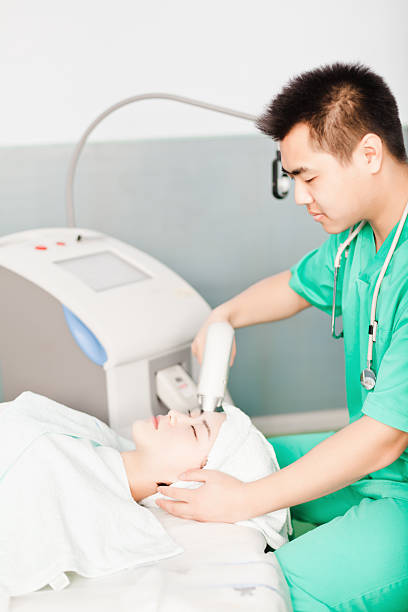

Over the past few decades, laser technology has transformed a number of industries, with the healthcare sector seeing one of the biggest breakthroughs. Nowadays, laser therapies are widely employed in dental care, ophthalmology, dermatology, and other medical specialties. Laser technology is revolutionizing medical treatments and cosmetic procedures because to its accuracy, low invasiveness, and quick recovery times. WellHealthOrganic examines how laser technology is revolutionizing wellness and Healthcare App Development Company in USA by providing non-invasive, safe, and efficient treatments for a variety of ailments.
1. What is Medical Laser Technology?
Concentrated light energy is used in laser technology to treat a range of illnesses. Light Amplification by Stimulated Emission of Radiation is what the term “laser” stands for. Based on their wavelength and energy levels, lasers can be divided into many categories. They are employed in medicine to precisely target particular tissues. Minimal tissue damage, quicker recovery, and lower infection risks are some of the main advantages of laser technology. Because of its precision and effectiveness, it has emerged as a preferred option in many medical and cosmetic domains.
2. Skin Revitalization Using Laser Skin Treatments
The most popular use of laser technology is for skin care procedures. Improved skin tone and texture can be achieved by laser resurfacing, one of the most common laser operations. Laser resurfacing increases collagen formation by using concentrated light to target the skin’s outer layers. This improves skin suppleness and lessens the visibility of fine lines, wrinkles, and scars. While milder lasers like the Erbium laser can repair superficial skin blemishes, fractional CO2 lasers are especially good at addressing deep wrinkles and acne scars. Because these procedures are minimally invasive and have little to no recovery time, they are a desirable choice for anyone seeking non-surgical skin rejuvenation methods.
3. Permanent Hair Removal Using Laser
Another well-liked and very successful procedure that has become very popular in recent years is laser hair removal. Shaving, waxing, and tweezing are examples of traditional hair removal techniques that can be painful and time-consuming. In contrast, laser hair removal provides a permanent solution by using concentrated laser light to damage hair follicles and prevent new hair growth. The face, legs, arms, and bikini line are just a few of the areas of the body that it can be used to treat unwanted hair. Although it usually takes several sessions for patients to get the best results, laser hair removal is a practical and efficient substitute for conventional techniques because it may permanently reduce hair after treatment is finished.
4. Laser Tattoo Elimination: Removing Undesired Ink
Although tattoo removal has historically been a challenging and painful procedure, laser technology has made it safer and more effective. Strong laser beams are used in laser tattoo removal to dissolve the ink particles buried in the skin, enabling the body to gradually remove the ink on its own. Depending on the color of the ink, several laser wavelengths are utilized; Q-switched lasers are the most widely used because of their precise targeting of tattoo pigments. Laser tattoo removal is thought to be the safest and most efficient method of getting rid of undesired tattoos without leaving any scars, even though it could take multiple sessions.
5. Laser Acne Treatment: Addressing the Cause
Traditional treatments for acne, a prevalent skin condition that affects people of all ages, frequently involve topical creams or oral drugs that may not show improvements right away. However, by focusing on the germs that cause acne and lowering inflammation, laser treatments for acne can produce quicker, more noticeable effects. Diode lasers and pulsed dye lasers (PDL) are the two most used laser therapies for acne. By focusing on the sebaceous glands, these lasers lower oil production and eradicate the bacteria that causes acne. Because laser therapy promotes better skin texture and increases collagen synthesis, it also helps lessen acne scars. For people with chronic acne, laser technology presents a viable alternative because it has fewer adverse effects than conventional therapies.
6. Laser Eye Surgery: Accurately Improving Vision
In ophthalmology, laser technology has advanced significantly, particularly in vision correction procedures. Nearsightedness, farsightedness, and astigmatism are all commonly treated by laser eye surgery, commonly referred to as LASIK (Laser-Assisted in Situ Keratomileusis). In order to improve how light enters the eye, LASIK uses a laser to reshape the cornea, the transparent front surface of the eye. With a high success rate, patients might potentially achieve 20/25 vision or better with this operation, which frequently removes the need for glasses or contact lenses. It is a brief, minimally invasive procedure with short recovery periods and little discomfort.
7. Laser Pain Relief Procedures
Laser therapy is being used more and more for pain management in addition to cosmetic and vision-related operations. Low-energy lasers are used in low-level laser treatment (LLLT), sometimes referred to as cold laser therapy, to lessen muscle spasms, discomfort, and inflammation. In physical therapy settings, this kind of therapy is frequently utilized to treat ailments like back pain, tendinitis, and arthritis. By increasing cellular activity, the laser enhances blood flow and aids in tissue repair. Laser therapy is a well-liked alternative for people looking for pain relief without the use of drugs because it is non-invasive and drug-free.
8. Non-Invasive Dental Procedures: Laser Dentistry
With a number of advantages for patients looking for non-invasive procedures, laser technology is also becoming more and more popular in dentistry. Procedures including cavity removal, gum disease therapy, teeth whitening, and even biopsies can be performed with lasers. The accuracy that laser dentistry provides is one of its main benefits. By focusing on particular regions of the teeth or gums, lasers can minimize tissue damage and lessen the need for anesthesia. For example, cavities can be treated more quickly and comfortably with dental lasers, which remove decaying tissue without the need for a drill. Additionally, consumers seeking quick and efficient results frequently choose laser tooth whitening.
9. Laser Therapy: An Alternative to Surgery for Varicose Veins
Leg veins that are big and swollen, known as varicose veins, can be embarrassing and uncomfortable. Invasive surgery was once the standard therapy for varicose veins, but laser treatments are now a non-surgical option. Endovenous laser therapy (EVLT), one type of laser treatment for varicose veins, uses laser light to seal off the afflicted veins. The process has a high success rate in treating varicose veins and is minimally invasive, needing only tiny incisions. When opposed to traditional surgery, laser treatment for varicose veins is frequently favored due to its shorter recovery period and lower risk of complications.
10. Laser Treatment for Scarring and Stretch Marks
Common skin issues like stretch marks and scars can be challenging to cure with over-the-counter lotions and creams. Scars and stretch marks can be less noticeable with laser therapy, which has been shown to be an effective therapeutic option. To address these issues, fractional lasers—like the CO2 laser—are frequently employed. By promoting the synthesis of collagen in the skin’s deeper layers, the laser enhances the skin’s suppleness and texture. Stretch marks and scars can be made less apparent and smoother by using laser treatments to help erase their discoloration. The advantages of laser therapy for skin resurfacing are substantial, albeit it could take several sessions to get the best effects.
11. The Security of Laser Therapy
The safety of laser treatments is one of their main benefits. Lasers are extremely accurate and exclusively target the areas that require therapy, leaving surrounding tissues generally unharmed, in contrast to invasive procedures or traditional operations. Furthermore, laser treatments usually have a lower chance of problems and shorter recovery periods. However, laser treatments should only be administered by qualified and experienced specialists, just like any other medical operation. To guarantee the greatest result and reduce any potential hazards, selecting a trained dermatologist or healthcare expert is crucial.
12. Cost Factors for Laser Procedures
Even if laser treatments have many advantages, it’s vital to take their expense into account. Compared to conventional techniques, laser treatments might be more costly, particularly if several sessions are needed. The type of treatment, the region being treated, and the provider’s location are some of the variables that affect laser procedure costs. Many patients, however, discover that the non-invasive nature of laser treatments and its long-term advantages outweigh the expense. To make the operation more reasonable, it’s crucial for those thinking about laser treatments to investigate several providers and talk about payment choices.
13. The Use of Laser Technology in Upcoming Medical Advancements
In the upcoming years, it is anticipated that the application of laser technology in healthcare would only increase. There will be new and improved therapies for a number of ailments as laser technology develops. With potential uses in fields including tissue regeneration, wound healing, and cancer treatment, researchers are always trying to increase the accuracy and effectiveness of lasers. Furthermore, combining laser technology with other cutting-edge advancements like robots and artificial intelligence may improve the efficacy and accessibility of laser therapies in the medical field.
14. Conclusion: Embracing Laser Treatments’ Future
Without a doubt, laser technology has revolutionized healthcare by providing patients with a variety of safe, efficient, and non-invasive treatment alternatives. Lasers are transforming the way we approach medical treatments, from pain management and dental care to skincare and hair removal. We at WellHealthOrganic think that harnessing the potential of laser technology may greatly raise the standard of medical care and aesthetic services. The potential for laser therapies will grow as technology develops further, providing even more opportunities to improve patient care and general health.