

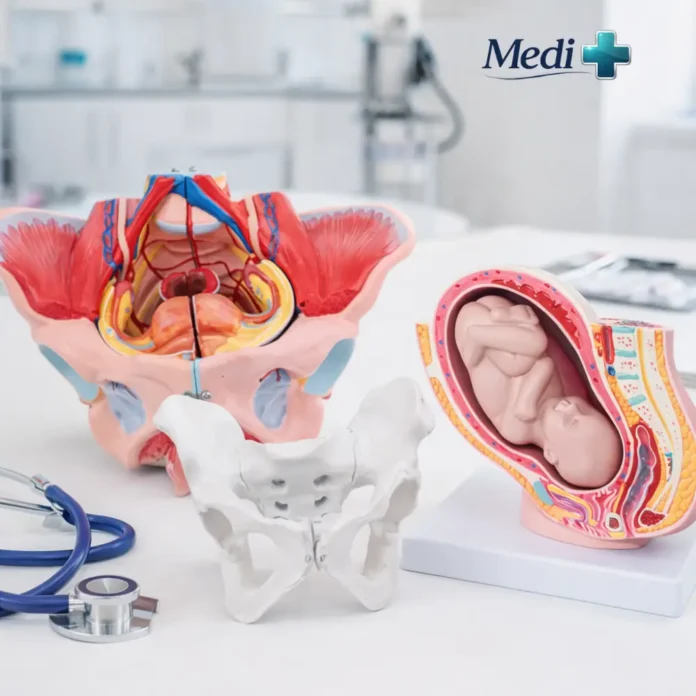

Understanding the human body becomes far more meaningful when it is studied as an interconnected system rather than a collection of isolated parts. For students and healthcare learners, gaining clarity on female body anatomy organs is essential for building a strong foundation in both theoretical knowledge and clinical awareness.
A System Built on Integration
The female body is composed of multiple organ systems that work together continuously. These include:
- Reproductive system
- Digestive system
- Urinary system
- Circulatory system
- Endocrine system
Rather than functioning independently, these systems interact closely. A change in one system can influence others, which is why understanding their relationships is just as important as knowing their individual roles.
Key Organs and Their Functions
Each organ within the female body has a specific purpose, but their true significance lies in how they contribute to overall function.
- Uterus: Central to reproduction, supporting pregnancy and development
- Ovaries: Produce eggs and regulate hormones
- Bladder: Stores and releases urine, positioned close to reproductive organs
- Intestines: Handle digestion and nutrient absorption
- Heart: Circulates blood and supports all bodily systems
These organs are arranged within a limited space, particularly in the abdominal and pelvic regions, making their positioning highly important.
The Importance of Organ Relationships
One of the most important aspects of anatomy is understanding how organs relate to one another. In the female body, this is especially relevant in the pelvic area, where multiple systems overlap.
For example:
- The uterus sits near the bladder and intestines
- Hormonal changes in the reproductive system can affect other organs
- Structural changes in one area can influence pressure and positioning elsewhere
This interconnectedness is why a system-based approach to learning is more effective than studying organs in isolation.
How Structure Supports Function
Every organ is shaped and positioned in a way that supports its role. This relationship between structure and function is a key concept in anatomy.
- The uterus has a muscular structure to support expansion
- The ovaries are positioned to allow egg release into the fallopian tubes
- The heart’s chambers are designed for efficient blood flow
Understanding why organs are shaped the way they are helps learners move beyond memorisation and develop deeper insight.
Challenges in Learning Female Anatomy
Many students find female anatomy particularly challenging due to:
- The complexity of overlapping systems
- Difficulty visualising internal structures
- Confusion between similar or closely located organs
These challenges often arise when learning is limited to flat diagrams or simplified explanations.
Developing Spatial Awareness
To overcome these difficulties, learners need to develop spatial awareness—the ability to understand where organs are located in relation to each other.
This includes:
- Visualising depth and layers within the body
- Understanding front-to-back and top-to-bottom positioning
- Recognising how organs shift during different conditions
Strong spatial awareness improves both comprehension and practical application.
From Basic Knowledge to Clinical Understanding
Learning anatomy is not just about identifying organs—it is about understanding how they behave in real situations. This becomes especially important in clinical settings, where accurate interpretation is essential.
A solid understanding of female body anatomy supports:
- Diagnosis of medical conditions
- Understanding of symptoms and their causes
- Effective communication in healthcare environments
This transition from basic knowledge to applied understanding is a key step in medical education.
A Holistic Approach to Learning
The most effective way to study anatomy is through a holistic approach. Instead of focusing on individual organs, learners should aim to understand how the body functions as a complete system.
This involves:
- Connecting different systems together
- Observing how changes affect multiple organs
- Studying anatomy in context rather than isolation
This approach leads to a more accurate and lasting understanding.
Conclusion
The female body is a highly organised and interconnected system, where each organ plays a role in maintaining balance and function. By focusing on relationships, structure, and real-world application, learners can gain a deeper and more practical understanding of anatomy.
Mastering female body anatomy organs provides a strong foundation for further study and supports the development of confident, informed healthcare professionals